

Ragi koozh -- the breakfast that powered agricultural Tamil Nadu
Ragi koozh is not a health trend. It is a working breakfast -- fermented, cooling, sustaining. Here is the traditional method, and why fermentation is the step that matters.
Ragi koozh -- finger millet porridge, fermented overnight -- is one of the oldest working breakfasts in Tamil Nadu. It sustained field labourers through long mornings in the heat. It is cooling, filling, and slow to digest.
The ragi itself is dense in calcium, iron, and amino acids. The fermentation adds a probiotic element and partially breaks down phytic acid. The result is something a nutritionist would call functional food, though the farmers who ate it every morning were not thinking in those terms.
What you need
- —1 cup RamYam sprouted ragi flour
- —4 cups water
- —Half tsp salt
- —2-3 tbsp buttermilk or sour curd for fermentation
- —For serving: small onions, green chilli, salt
The method
Mix the ragi flour in 2 cups of cold water until smooth -- no lumps. Bring the remaining 2 cups of water to a boil. Add the ragi slurry slowly, stirring continuously. Cook on medium heat for 8-10 minutes. The mixture will thicken significantly. Add salt.
Remove from heat. Let it cool to room temperature. Add the buttermilk or sour curd. Stir well. Cover loosely with a cloth -- not an airtight lid. Leave overnight at room temperature.
How to eat it
Koozh is eaten by hand, traditionally. Take a portion, make a small well in it, add a pinch of salt, a chopped small onion, a piece of green chilli. Eat it cool or at room temperature -- never reheated.
FSSAI certified. Traceable to source. No additives.
More from the kitchen
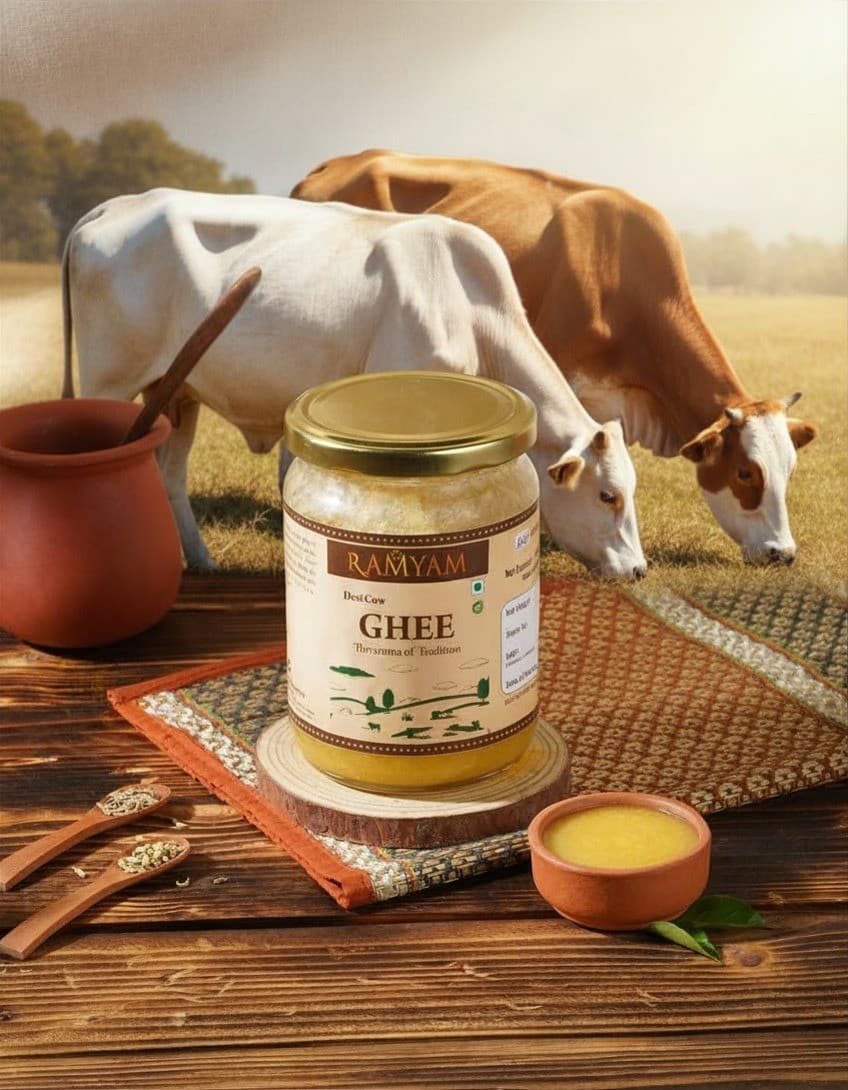
How to make ghee rice -- the RamYam way
A dish where the quality of the ghee is the dish. Two ingredients, one honest pot, and the kind of rice you remember from someone's kitchen.

Sprouted flour roti -- what changes and why it matters
Sprouting changes the grain before grinding. The result in the roti is subtle but real -- a texture, a taste, a nutrition profile that the fast version does not have.

Using cold-pressed oil in your everyday cooking
Cold-pressed oils have lower smoke points -- and that is not a flaw. Here is how to cook with them well, and why the flavour payoff is worth it.