

Cold-pressed oils have lower smoke points -- and that is not a flaw. Here is how to cook with them well, and why the flavour payoff is worth it.
The first thing most people say when they switch to cold-pressed oil is: it smells different. It does. That is not a problem. That is the oil.
Cold-pressed oils are extracted at low temperatures without chemical solvents. Refined oils are extracted at high heat, then treated with hexane, deodorised, bleached, and neutralised. The result is an oil that can be heated to 230C and has no smell, no taste, and no micronutrients worth mentioning.
Cold-pressed oil has a smoke point between 160-180C depending on the variety. This is not a defect. It is a different category of ingredient.
What the lower smoke point means in practice
You do not need 230C for most of what you cook at home. Sauteing onions: 120-140C. Tempering mustard seeds: 150-160C. Pan-frying at medium: 160-170C. All of this is within range.
For deep frying, cold-pressed sesame or groundnut oil works if you keep the temperature controlled. For repeated high-heat frying, refined oil is more forgiving. Use what the food requires.
Which oil for which dish
- —Cold-pressed groundnut oil -- Tamil and Andhra cooking, tadkas, rice dishes. Robust flavour that holds up to spice.
- —Cold-pressed sesame oil -- south Indian curries, chutneys, finishing oil. Add after cooking for maximum flavour.
- —Cold-pressed coconut oil -- Kerala dishes, puttu, idiyappam, desserts. Solidifies in the cold -- this is normal.
The flavour payoff
A simple test: fry mustard seeds in refined sunflower oil, then in cold-pressed groundnut oil. Same seeds, same pan, same heat. The flavour difference in the finished dish is not subtle. The cold-pressed version carries the seasoning into the food. The refined version carries almost nothing.
FSSAI certified. Traceable to source. No additives.
More from the kitchen
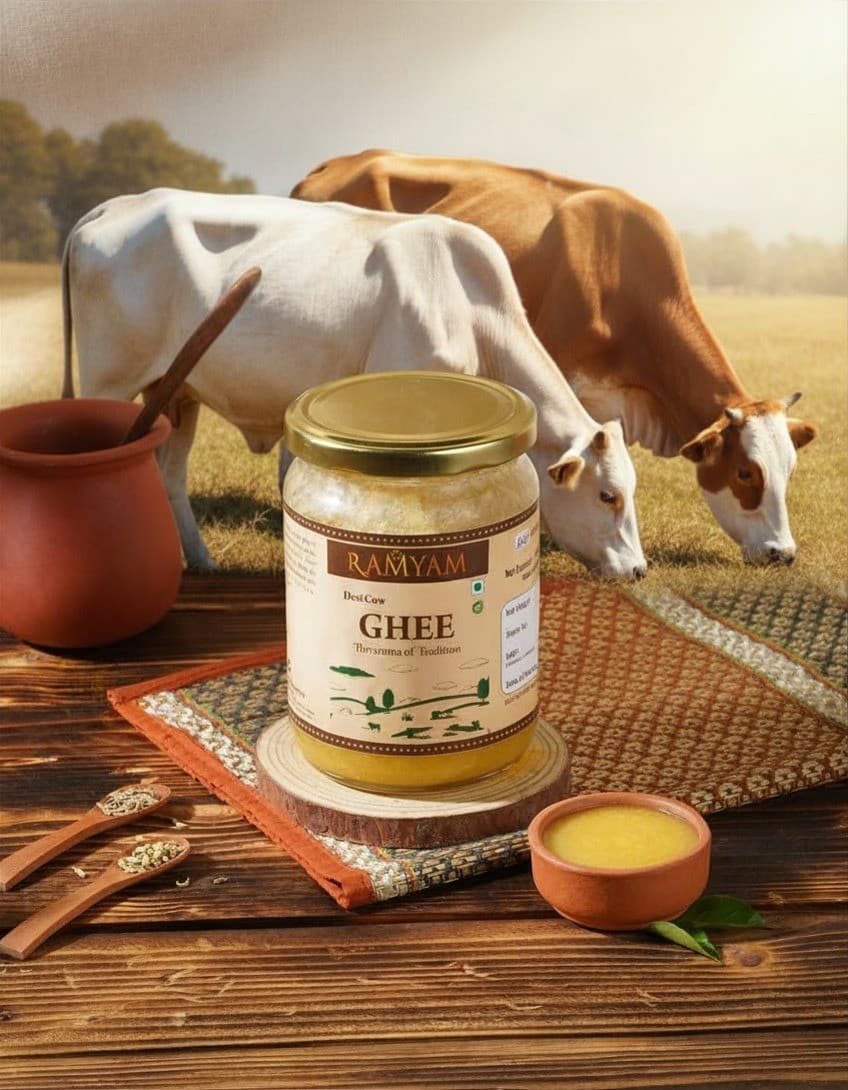
How to make ghee rice -- the RamYam way
A dish where the quality of the ghee is the dish. Two ingredients, one honest pot, and the kind of rice you remember from someone's kitchen.

Sprouted flour roti -- what changes and why it matters
Sprouting changes the grain before grinding. The result in the roti is subtle but real -- a texture, a taste, a nutrition profile that the fast version does not have.

Why your ghee should have an aroma
Commercial ghee is designed to be odourless. That is not a quality standard -- it is a processing decision. Here is what bilona ghee actually smells like, and why it matters.