
“Some things were never broken. They just got left behind.”
In villages not far from where you live, there are people who still make food the old way. Not because it's fashionable — but because they never stopped.
They grow what their grandparents grew. They press, dry, and churn with the same patience. Their products rarely travel far. Most of it stays local or disappears quietly.
We started RamYam because we thought that was wrong.
It started with one pot of ghee and a question we couldn’t shake.
Why does ghee from a village kitchen taste completely different from anything you find in a store? The answer, we learned, isn’t a secret or a mystery. It’s method. And time.
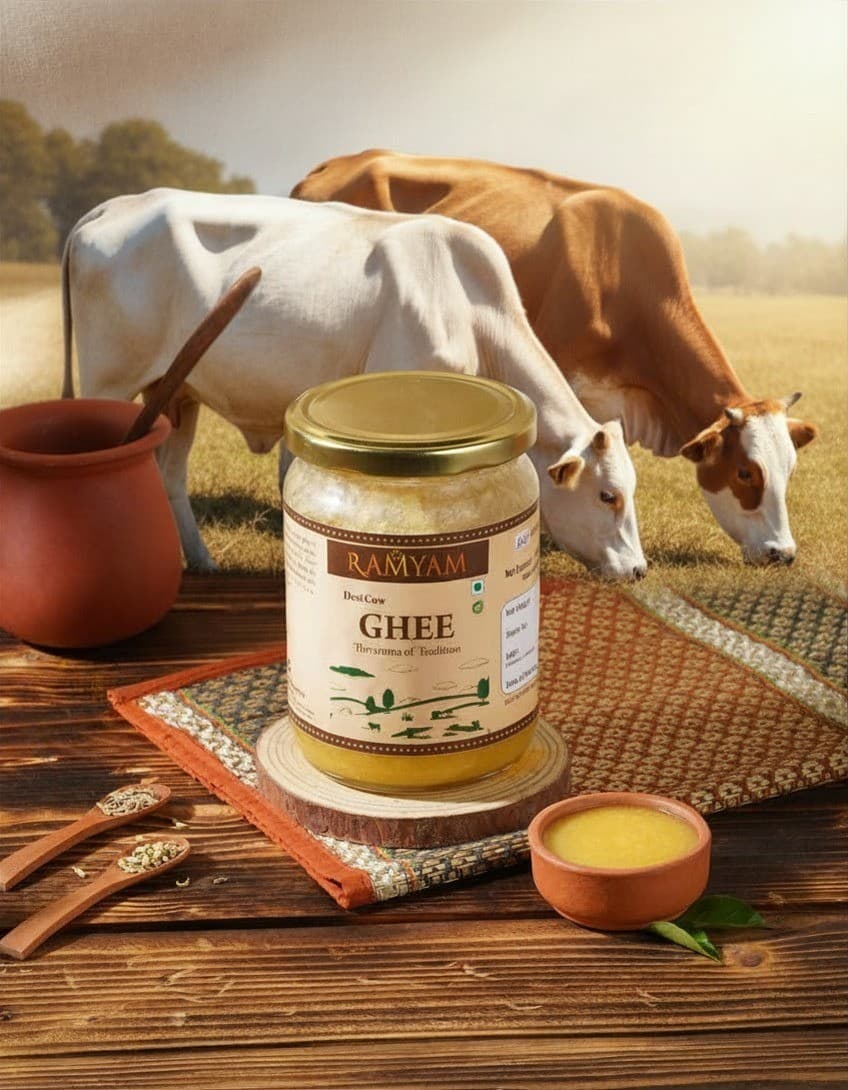
Most commercial ghee starts with cream that’s been separated by machine. Our ghee starts the way it always did — with fresh curd, churned by hand into white butter, then placed over a low flame and watched until it becomes something else entirely. The house fills with a smell that’s hard to describe and impossible to fake.
These aren’t high-yield breeds. They don’t produce at scale. The process is slow, the quantities are limited, and none of that is a problem we’re trying to solve.
We made a decision early on. The process is the product.
There are three things we hold to, across everything we make:
The old way, even when it's slower
Cold-pressed oils through wooden ghani presses. Grains are sprouted and sundried before grinding , This adds more flavour to the flours . Ragi and pearl millets are roasted before grinding. Turmeric dried under open sky, not in ovens. The slower path leaves something in the food that speed removes — a depth of flavour, a nutritional integrity, a quality that registers when you eat it even if you can't name what you're tasting.
Native seeds, not engineered substitutes
We work with what grew here before the industry told farmers to change. Indigenous varieties have a complexity that hybrid crops are bred to trade away — for shelf life, for appearance, for uniformity. We'd rather have the complexity.
Honest over consistent
Batches vary. Seasons vary. A turmeric from one village won't be identical to one from another. We don't correct for that. We think it's the point. Food that's truly grown has variation — and that's how you know it's real.
A small range made carefully.
We haven’t rushed to expand. Each product we carry had to earn its place — sourced from people we know, made by methods we’ve seen with our own eyes.
Cow Ghee
Made the way it was done at home, before shortcuts existed. Fresh curd is churned into butter by hand, then clarified slowly over a low flame. No cream separator, no industrial process — just curd, time, and a flame kept low enough to get it right.
Turmeric
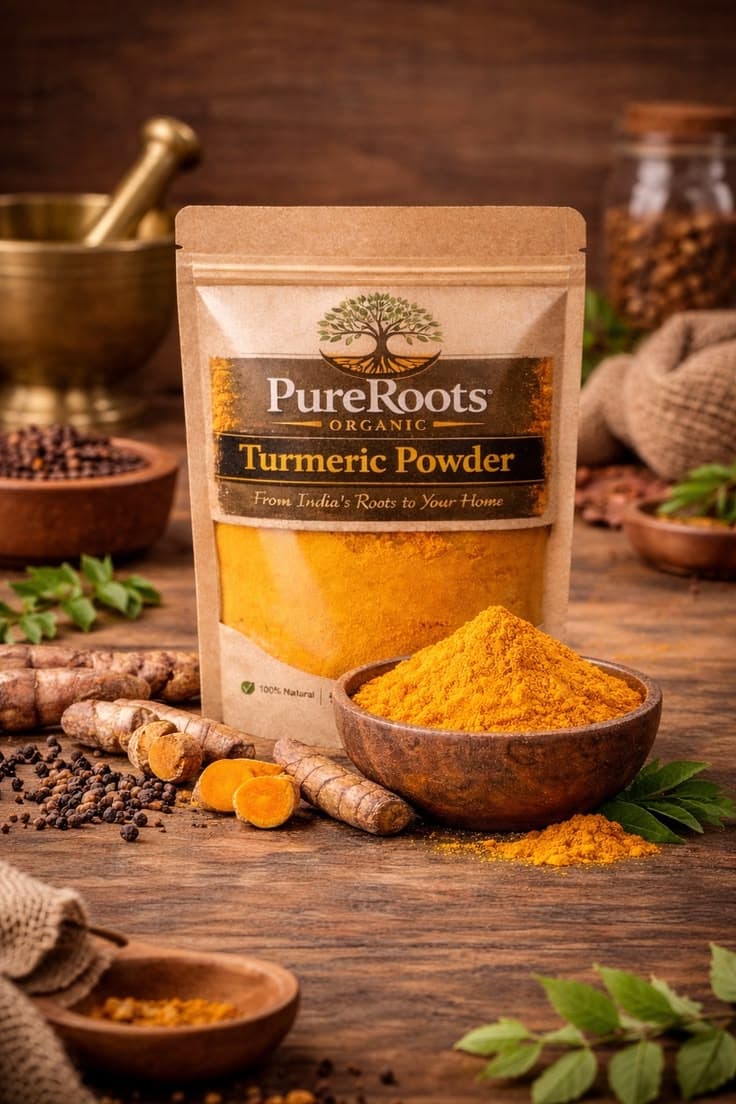
Open sun-dried. Ground in its whole form. No additives, no colour touch-ups. What you get is what was grown.
Cold-Pressed Oils
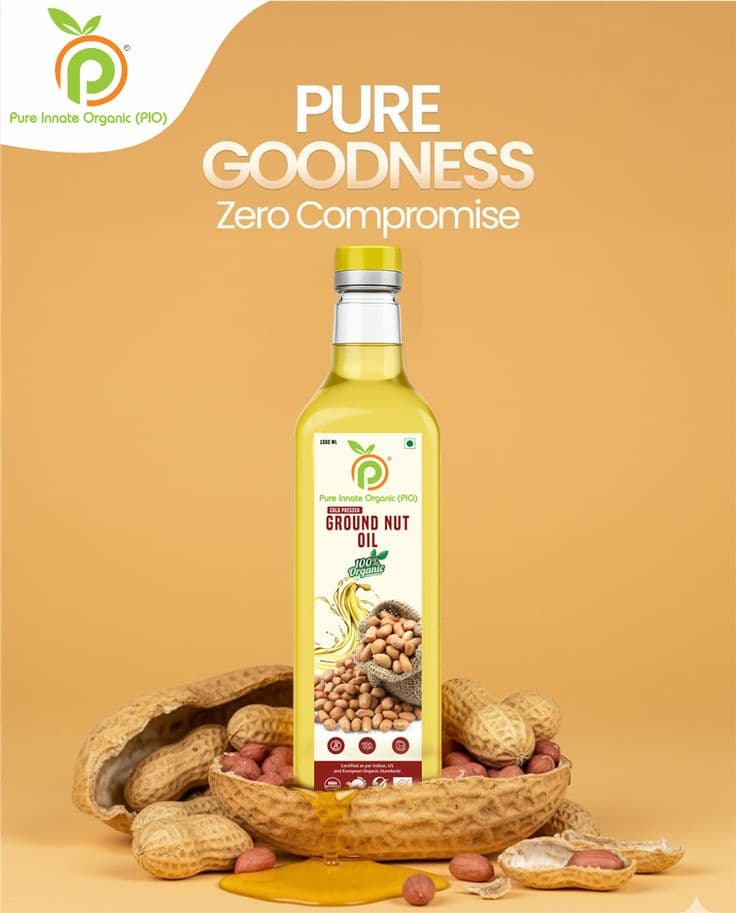
Wooden press. Room temperature. No hexane, no refining. The oil carries the character of what it was pressed from.
Jaggery & Flours
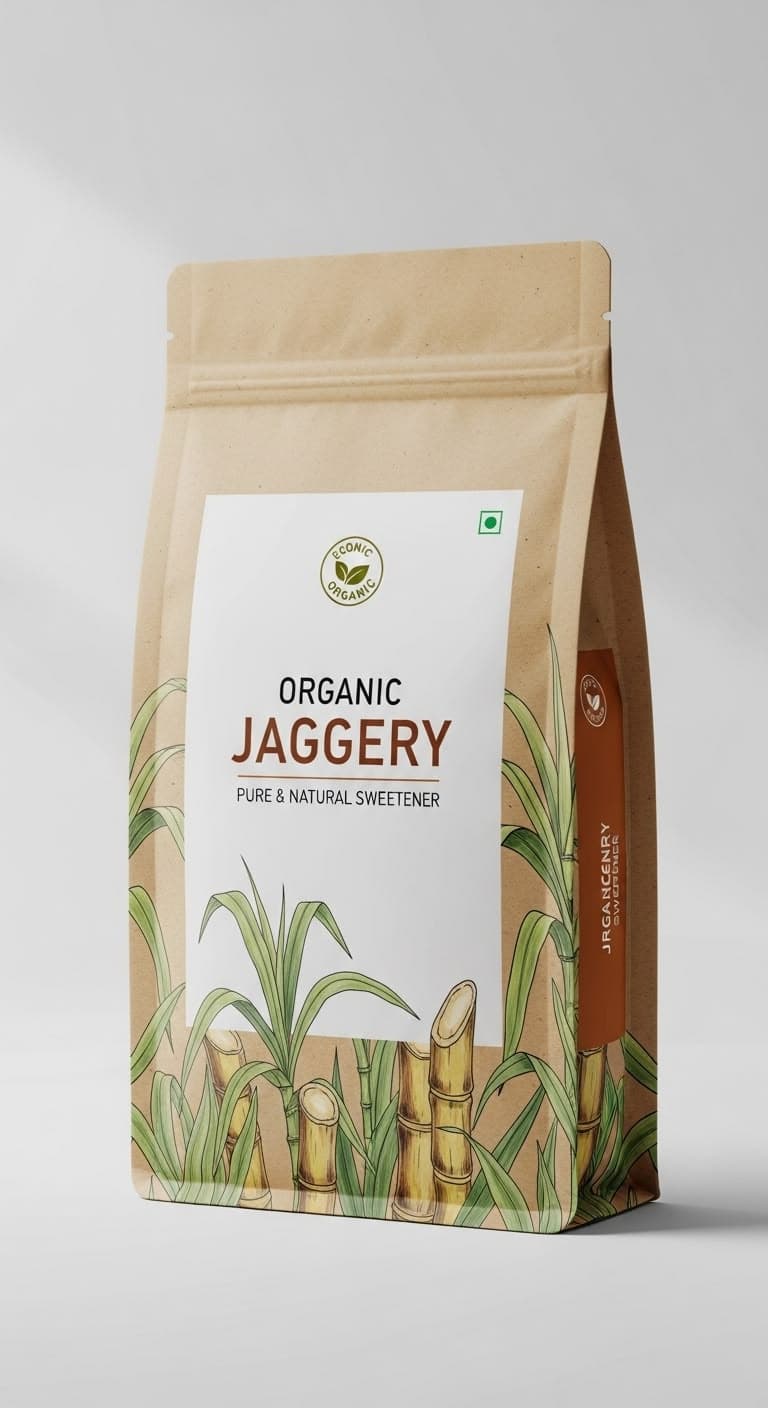
No additives in the jaggery. Sprouted grains in the flour, processed slowly. That's it.
We’re a small business. But what we do reaches far.
The farmers and artisans who make these products aren’t suppliers to us in the usual sense. They’re the reason RamYam exists. We didn’t come in to teach them anything — we came to find them, and to make sure that what they do finds a market.
When people consistently buy a product, it tells the family making it that they can keep going. That their child might continue the craft. That the knowledge doesn’t have to disappear when the older generation does.

RamYam is FSSAI certified — licensed as both a manufacturer and trader. Not just technically, but properly. Every product is traceable to source.
We've been in homes for over six years now. No viral moment. No big launch. Just people who tried it once and kept coming back and told someone else.
We know exactly where each product comes from. That's not a tagline — it's a requirement we hold ourselves to.